
Two Tracks: Right-to-Know Law and Court Records Policy
Pennsylvania splits public access into two tracks. Most county agency files open under the Right-to-Know Law (RTKL), 65 P.S. sections 67.101 to 67.3104. This law covers records held by a county office, like sheriff records, prison records, county budgets, and administrative files. Anyone can ask for these. You do not have to say why you want the record.
Court case records use a different track. They follow the Unified Judicial System Case Records Public Access Policy, 204 Pa. Code section 213.81, set out within Chapter 213. The difference matters. Criminal, civil, and traffic case records are court records, so you search them through the Pennsylvania UJS Case Search, not through a Right-to-Know request. Send a court file request to an agency open-records officer and it goes nowhere. Pick the right track first and the rest gets easier.
What Records York County Offices Hold
Beyond court case files, county offices keep many kinds of records, and each office holds its own set. The Prothonotary keeps civil and family filings, judgments, liens, and name changes. The Clerk of Courts keeps criminal records. The Register of Wills, which also serves as Clerk of the Orphans' Court, keeps estates, marriage licenses, and old birth and death records from 1893 to 1906. Later vital records are not held at the county. Those are with the Pennsylvania Department of Health, Division of Vital Records.
- Civil and family filings, judgments, liens, and name changes (Prothonotary)
- Criminal records (Clerk of Courts)
- Estates, marriage licenses, and orphans' court files (Register of Wills)
- Birth and death records from 1893 to 1906 (Register of Wills)
Knowing the holder saves time. The full case-record policy is published by the courts, and it spells out what gets posted and what stays back. You can read the policy section itself at the source below.
See the UJS Case Records Public Access Policy for the court-record rules.
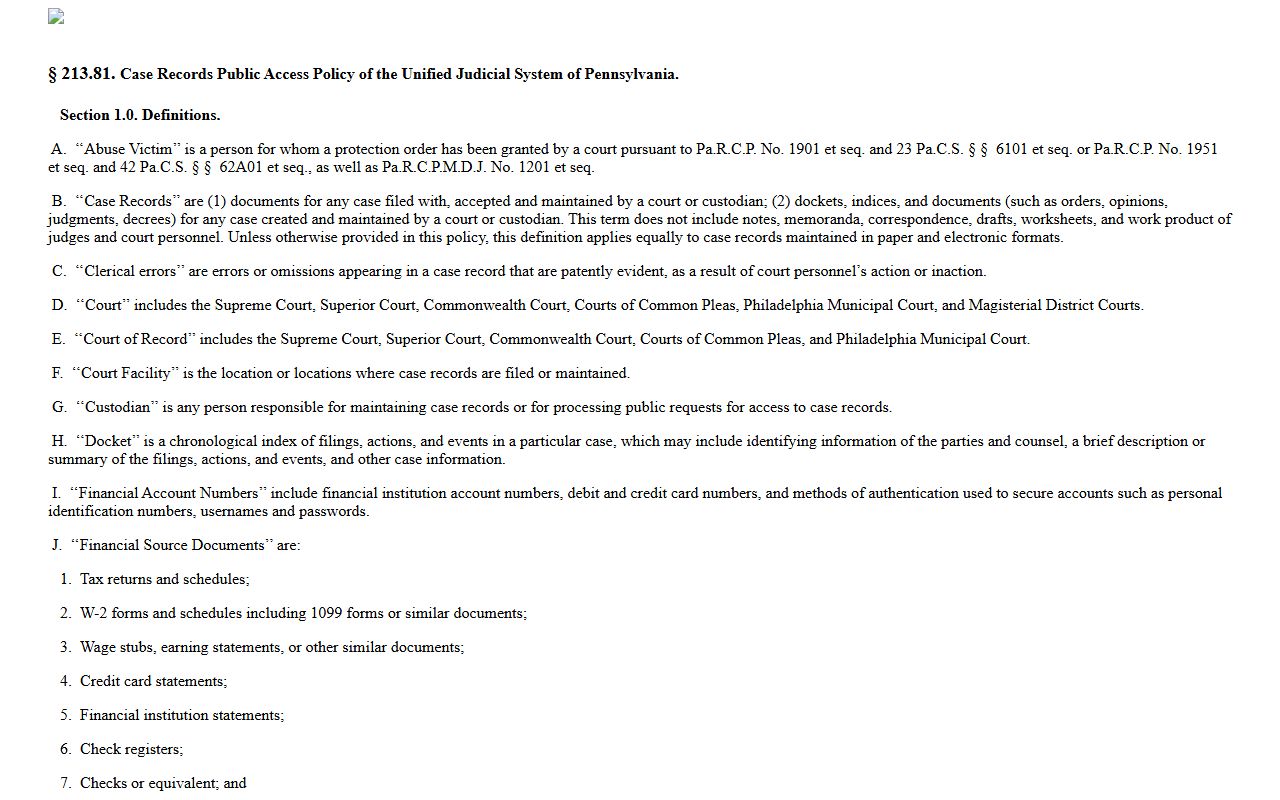
The policy sets one standard statewide, so York County case files follow the same access rules as the rest of the courts. For the offices that hold these files, see the Prothonotary and the Clerk of Courts.
How to File a Public Records Request in York County
A Right-to-Know request goes to the agency that holds the record, in writing. You address it to the agency's open-records officer. Court case files do not use this path. For those, use the UJS portal instead. The steps below walk through a standard agency request.
- Identify the agency that holds the record. Court case records use the UJS portal, so check that you need an agency file and not a docket sheet.
- Put the request in writing. Address it to the agency open-records officer, and use the agency's Right-to-Know form if it has one.
- Describe the records clearly. Give names, dates, and a record type so staff can find the file.
- Submit the request and keep a copy for your own records.
- Wait for the agency response. It is generally due within five business days, though the agency may take a short extension.
- If the request is denied, appeal to the Pennsylvania Office of Open Records, unless another forum controls the matter.
The clearer the request, the faster the answer. Vague asks slow things down and may draw a request to narrow the scope.
Public Records Request Form Fields
A written request needs a few core fields. Some agencies post a form, but the basics stay the same. Fill in each field and the office can act on the request without coming back to you for more.
| Field | Required | Notes |
|---|---|---|
| Requester Name and Contact | Yes | So the agency can respond |
| Agency or Office | Yes | The county office that holds the record |
| Records Requested | Yes | Be specific, with names, dates, and type |
| Format | Optional | Paper copies or electronic |
| Date of Request | Yes | Starts the response clock |
Keep a copy of what you send. The date of the request matters, since it starts the clock the agency must meet.
Response Timelines
Under the Right-to-Know Law, an agency response is generally due within five business days. The agency can take a short extension in some cases, such as when the records are hard to gather or held off-site. If the agency does not answer in time, the law treats the silence as a denial, and you can appeal.
Court records run on a different clock. The case records policy controls how and when court files get released, and the rules apply across the whole state, not just one county.
Read the Pennsylvania court records policy chapter for the full set of court access rules.
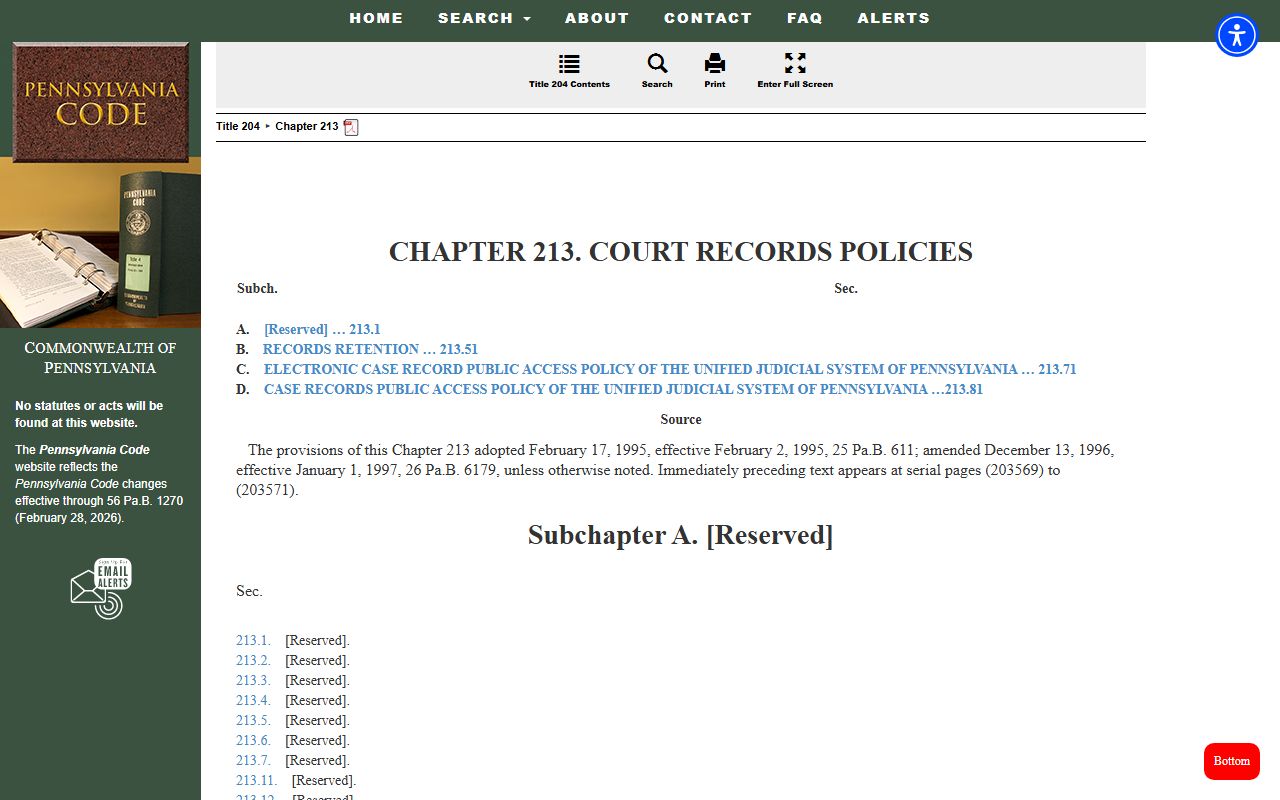
Chapter 213 lays out the access standard for case files, dockets, and related court data. For the case files themselves, see court records.
Public Records Fees in York County
Fees depend on the office and the kind of copy you want. County court offices set fixed per-page and certification rates. Right-to-Know agency copy fees are set by each agency, so they can differ from office to office. The table below lists common county court office charges.
| Item | Amount |
|---|---|
| Clerk of Courts black and white copy, per page | $0.25 |
| Clerk of Courts certified copy | $12.00 |
| Prothonotary copy in person, per page | $0.50 |
| Prothonotary copy by mail, per page | $1.00 |
| Orphans' Court certification | $10.00 (plus $1 per page if a copy is not furnished) |
| Criminal record check (Clerk of Courts) | $7.00 |
Ask about the cost before you order a large set of copies. For estate and marriage records, see the Orphans' Court office.
Records That Are Exempt
Not every file is open. Some records are confidential by law and stay closed to the public. Juvenile dependency and delinquency files have limited access. Adoption records are confidential. Mental health proceedings are limited. Sealed or expunged criminal records are closed for good. Even on open docket sheets, the court redacts addresses and Social Security numbers.
Criminal history records have their own rules under the Criminal History Record Information Act, 18 Pa.C.S. Chapter 91. Expungement is processed through the courts and the Pennsylvania State Police. If a record has been expunged, it no longer shows in a public search.
Start an expungement at the Pennsylvania expungement service.
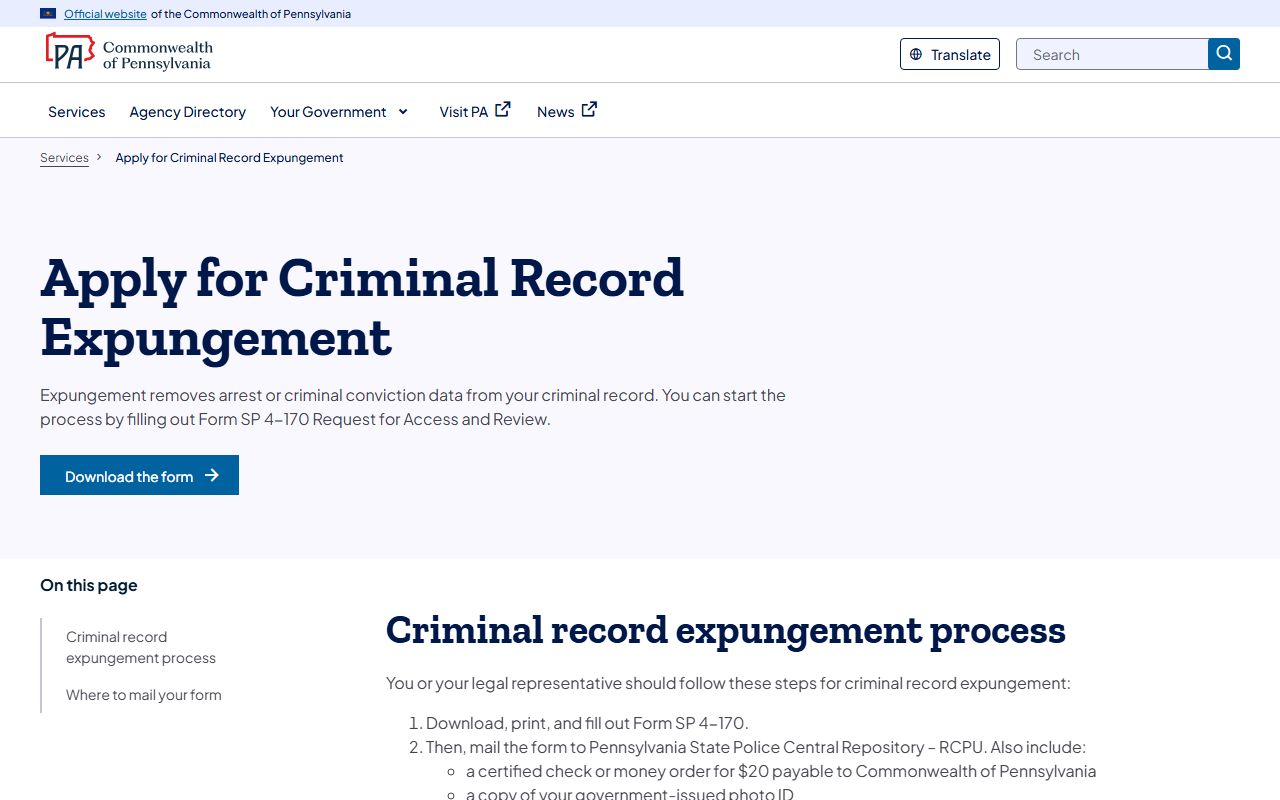
An expungement order removes the record from public view, so always confirm the order is final. For arrest and charge data, see criminal records.
If Your Request Is Denied
A denial is not the end. For a Right-to-Know request, you can appeal to the Pennsylvania Office of Open Records. You file the appeal in writing, and you must do it within the set time after the denial. The Office reviews the matter and decides whether the record should be released. In some cases, another forum controls the appeal instead, so check which body hears your type of record.
Court record disputes follow the case records policy, not the Right-to-Know appeal route. If a clerk will not release a court file you think is open, ask the court directly and point to the access policy.